Renovations: why floor plans are essential
Blog
table of contents
The renovation plan: defining the project
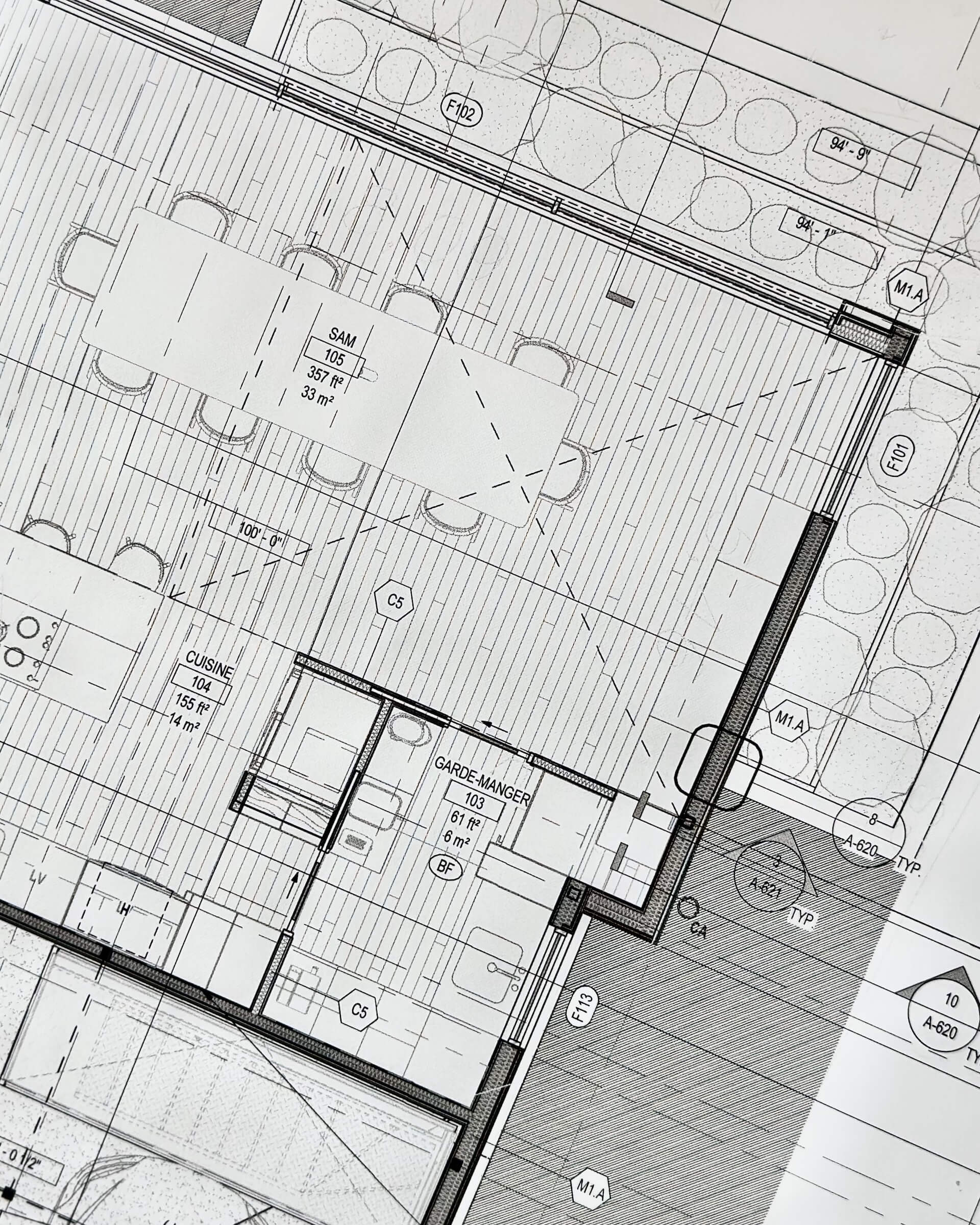
A well-developed renovation plan establishes the foundation for a successful project. It translates your objectives into a coherent design, identifies the proposed modifications, and provides a clear reference for the professionals involved.
Whether the work involves reorganizing interior spaces, modifying structural elements, or extending an existing home, careful planning helps anticipate technical requirements, coordinate interventions, and guide decisions throughout construction.
Coordinating professionals, construction stages, and materials
Renovation plans are essential to organizing the sequence of work. They establish the scope of the project, clarify the interventions required, and provide the information needed to coordinate the various trades.
The general contractor uses these documents to plan construction activities, schedule specialized trades, and coordinate the procurement of materials and equipment. Proper sequencing helps prevent unnecessary interruptions, avoid duplicated work, and limit additional costs.
Establishing a realistic construction schedule
The planning phase brings together the information needed to establish a realistic construction schedule. Architectural drawings, technical specifications, and subsequent revisions provide a common reference for homeowners, contractors, and other professionals.
Material availability and delivery lead times must also be considered. Windows, doors, custom cabinetry, and certain specialized products may require significant production time. The construction schedule is therefore developed according to procurement requirements, permit approvals, and the availability of the professionals involved.
Estimating project costs
Detailed renovation plans are essential to developing a reliable construction estimate. They allow the contractor to evaluate the scope of work, identify required materials, coordinate related interventions, and assess the project's technical complexity.
Preliminary estimates based on square footage can provide an initial indication of costs, but they cannot account for all the characteristics of an existing building or the specific requirements of a renovation. A more accurate budget depends on the level of detail available and a thorough understanding of existing conditions.
When should you begin planning your renovation?
For a major renovation, we generally recommend beginning the planning process approximately one year before the anticipated start of construction. Depending on the project's complexity, this provides time to develop the design, consult the appropriate professionals, evaluate costs, and make informed decisions without unnecessary pressure.
It also allows for municipal permit applications, whose processing times can vary considerably according to the municipality, the nature of the proposed work, and any additional approvals required.
Plan your renovation with experienced professionals
Founded in 2001, Cré-Actif specializes in major residential renovations, construction, and project management. We work closely with homeowners and the professionals involved to develop a clear understanding of the building, define the project's requirements, and coordinate the planning process.
From the initial assessment to construction, our approach emphasizes careful preparation, transparent communication, and the coordination necessary to carry architectural intentions through to completion.
Contact us to discuss your renovation project and explore the next steps.